
《社会性动物》(The Social Animal--The Hidden Sources of Love, Character, and Achievement)文字版[PDF]
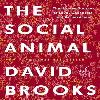
电驴资源
| 用户共享的电驴资源列表 | |
|---|---|
| [社会动物].David_Brooks.-The.Social.Animal.-.The.Hidden.Sources.of.Love,.Character,.and.Achievementl.pdf | 3.01 MB |
| 3.01 MB | |
电驴资源简介
简介:

“《社会性动物》一书的论点是通过小说的形式来表达的。布鲁克斯在书中虚构了一对夫妇哈罗德和艾瑞卡,丈夫来自大富人家,妻子则是出生于混乱街区的破裂家庭,作者追溯了两人的性格形成期、婚姻、职业、退休乃至终老。这本在美国已经位列畅销书的《社会性动物》的确值得一读,也许有人会越读越恼火,但它可能有助于解决西方社会中某些积重难返的顽疾,例如如何形成社会流动性、改革反社会的缺乏互信以及隐私保护问题。”
时代周刊关于本书及其作者的简短采访: http://www.tudou.com/programs/view/z3Qi8bOw-Bs/
大卫布鲁克斯关于本书的TED演讲:http://www.tudou.com/programs/view/Uo_mYmXltlA/
以下源自亚马逊图书
An Amazon Interview with David Brooks
We talked with David Brooks about, among other things, Jonathan Franzen, Freud, and Brooks's own unfamiliar emotions, just before the publication of The Social Animal. You can read the full interview on Omnivoracious, the Amazon books blog, including this exchange:
Amazon.com: Speaking of Tolstoy, I bet a lot of people are going to quoting the first line of Anna Karenina to you: Happy families are all alike. Every unhappy family is unhappy in its own way. Is there a consistency between what makes a family happy, the way that this family turns out to be?
Brooks: You know, I never bought Tolstoy's line.
Amazon.com: I didn't either.
Brooks: I didn't know many happy families that were alike. One of the things you learn is that we're all so much more complex. We all contain multitudes, so someone who might be a bully in one circumstance is incredibly compassionate in other circumstances. We have multiple selves, and the idea that we can have a very simple view of who we are, what our character is, that's actually not right.
One of the things all this research shows you is how humble you have to be in the face of the complexity of human nature. We've got a 100 billion neurons in the brain, and it's just phenomenally complicated. You take a little child who says, I'm a tiger, and pretends to be a tiger. Well that act of imagination--conflating this thing I with this thing tiger --is phenomenally complicated. No computer could ever do that, but it's happening below the level of awareness. It seems so easy to us. And so one of the things these people learn is they contain these hidden strengths, but at the same time they have to be consciously aware of how modest they can be in understanding themselves and proceed on that basis.
A Letter from Author David Brooks
Several years ago I did some reporting on why so many kids drop out of high school, despite all rational incentives. That took me quickly to studies of early childhood and research on brain formation. Once I started poking around that realm, I found that people who study the mind are giving us an entirely new perspective on who we are and what it takes to flourish.
We’re used to a certain story of success, one that emphasizes getting good grades, getting the right job skills and making the right decisions. But these scientists were peering into the innermost mind and shedding light on the process one level down, in the realm of emotions, intuitions, perceptions, genetic dispositions and unconscious longings.
I’ve spent several years with their work now, and it’s changed my perspective on everything. In this book, I try to take their various findings and weave them together into one story.
This is not a science book. I don’t answer how the brain does things. I try to answer what it all means. I try to explain how these findings about the deepest recesses of our minds should change the way we see ourselves, raise our kids, conduct business, teach, manage our relationships and practice politics. This story is based on scientific research, but it is really about emotion, character, virtue and love. We’re not rational animals, or laboring animals; we’re social animals. We emerge out of relationships and live to bond with each other and connect to larger ideas.