
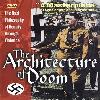
《德意志的毁灭》(The Architecture Of Doom)
电驴资源
| 用户共享的电驴资源列表 | |
|---|---|
| [德意志的毁灭].The.Architecture.of.Doom.(1989).-.Nazism.Documentary.avi | 551.36 MB |
| 德意志的毁灭.the.architecture.of.doom.(1989).-.Nazism.Documentary.rmvb | 371.14 MB |
| 922.50 MB | |
电驴资源简介
简介:

导 演: Peter Cohen 皮特·柯恩
主 演: 布鲁诺·冈茨 Bruno Ganz,Rolf Arsenius,Martin Bormann,Dr. Karl Brandt,
Arno Breker,Hermann Giesler,Josef Goebbels,Sam GrayJoan Rivers
上 映: 1989年10月13日
地 区: 瑞典
对 白: 英语
评 分: 8.2/10 (102 votes)
颜 色: 黑白
时 长: 114mins
类 型: 记录片
分 级: 瑞典:11(MPAA级别)
字 幕:内嵌中文字幕
作为颠覆着名记录片 德意志的胜利 的对立片--- 德意志的毁灭 (The Architecture Of Doom)是一部很值得看的珍贵影象


近来推出关乎纳粹的片子: 《意志的胜利》这部着名的纪录片是在二战时期,由纳粹国家机器操纵的宣传机器,为希特勒歌功颂德的大作,由大名鼎鼎的雷妮·瑞芬斯塔尔导演完成.
后者是皮特·柯恩的影片,不太有名,但是颠覆了所谓“德意志的胜利”──那不过是一个疯子和屠夫的意志。
前者反映的是:纳粹之伟大意志之火炬,万众一心,手持火炬,照耀着柏林,照耀着元首之场面,用尽宣传之手段粉饰一个所谓的 千年帝国,盛世王朝,超人的国度 ……
而后者反映的: 胜利 与 强大 面具下的罪恶,战争的血腥残酷,硝烟里的一片废墟,生灵涂炭,犹太人的苦难,恐怖集中营和腐臭尸骨堆
The artistic underpinnings of Nazi terror
The puzzle of Hitler and the Holocaust continues to twist in and out of the popular consciousness like a particularly hardy virus, most recently in the alleged new archival evidence (in the new book Hitler s Secret: The Double Life of a Dictator by respected German historian Lothar Machtan) that Hitler was gay. This idea has its attraction as perhaps one component of what happened, with Hitler’s pathological genocide of outsiders and marginalized groups possibly the most extreme expression in history of the deep self-loathing that often accompanies life in the closet.
Peter Cohen did not have this material available for his 1989 documentary The Architecture of Doom, and it’s hard to say whether he would have used it if he had. But Cohen plays a larger and more subtle hand. In this brilliantly written and visualized documentary, he uses rare historical footage to show how Hitler and his cronies used art to create an ideology of beauty that both demonizes an enemy and galvanized the professional classes, along with many rank-and-file Germans, into either actively participating in or tacitly approving of the destruction of millions.
Hitler was an accomplished artist but also — and crucially, says Cohen — a failed one, rejected from art school, which embittered him and set him on a drastically different path. Further investigation reveals an astonishing prevalence of failed artists, novelists, poets, etc., including Joseph Goebbels, in the middle and upper echelons of the party. Hitler understood that in order to win a populace to a cause, there must be a powerful underlying ideology. The usual explanations of Hitler’s rise due to economic privation tell only part of the story; the rest of it can be found in his complex creation of an art-based mythology formed to convince Germans that their country was a direct descendant of imperial Greece and Rome and should thus have monumental, heroic, wholesome art to reflect this. A stumbling block to recapturing these glories of the past, according to the Nazi view, were degenerate groups — the mentally ill, Jews, gypsies, homosexuals — polluting German bloodlines either through alleged massive procreation (the mentally ill) or impure art (Jews).
The film dazzlingly shows just how much of the ideology Hitler created derived from, and later depended on, art. He was a longtime connoisseur, making vast numbers of art purchases, at Nazi-organized art shows; and seizures, from occupied territories. One of his obsessions, shown in all its excess in the film, was the clean art of massive white stone Aryan musculature; wildly oversized statuary; ridiculously large domed buildings (one capable of holding 180,000 people); and kitsch-heroic and pastoral paintings that showed an idealized Germany that awaited them after conquering the world. This avalanche of art and architecture, most of it commissioned personally by Hitler, was meant to crowd out the un-art and un-culture of Bolshevik Jews (the two were invariably coupled in Hitler’s undiscriminating mind) supposedly wreaking havoc on the noble German.
Contrasting this proposed future world of Aryan bliss were cubist and expressionist images of faces and bodies by Picasso, Kokoschka, Emil Nolde, and others, likened to the deformed faces and bodies of mentally ill institutionalized citizens in a chilling Nazi-era slide show. Using such threatening if simple-minded paradigms helped immeasurably in demonizing Jewish (and modern) artists and thus Jews. More hygienic art showing normal, robust Germans at work and in repose could counter what Hitler and his minions reduced to a kind of noxious bacteria burrowing into the German body: the Jew. Many ambitious doctors joined this effort, with the least ethical, those willing to put the stamp of approval on this idea, elevated to the top ranks. (Nearly half of German doctors were Party members.)
Hitler had other artistic fixations that would serve him in his quest. One was, of course, Wagner, whose work could bring him to tears, and, according to Cohen, offered a fantastic illusion of flight from reality that der Feuhrer found both irresistible and inspiring. He was also fueled by a German pulp writer of cowboys and Indians novels aimed at boys, which he had cherished as a boy but continued to read into adulthood. The film points out that these novels were written by a man who had never been to America, and links Hitler to him as also a man who had no experience of cultures outside his purview.
Germany’s future in the Nazi plan — Hitler’s plan, really — also depended on cinema. Leni Riefenstahl’s documentaries are the best-known films in the Nazi propaganda arsenal, but The Architecture of Doom quotes extensively from two others made in 1937 and 1938. These are the notorious The Eternal Jew, which used footage of impoverished Polish Jews to show the kind of corrupt lifestyle that awaited Germans who dared to dissent; and an equally disturbing documentary about the threat of vermin — read: Jews — and the need to control such pests through virulent poisons. The film documents the fruit of the Nazi effort to transform human beings into vermin that must be purged as an act of self-defense.
Hitler’s dream of a clean and beautiful Germany devoid of such vermin soon collapsed both personally, as he became increasingly insane, and militarily, as Germany began losing ground in its two-front war. The most successful Nazi art shown in the film comes from sketches and paintings sent back from the Russian front, showing scenes of Nazi defeat and despair. But defeat merely spurred Hitler on; in Cohen’s eloquent phrase, he saw doom as art’s highest expression, and to the world’s lasting detriment became ever more frenzied in his attempt to create the horrifying high art of genocide.
影片截图:(偶用暴风播放器抓滴)


第一个和第二个内容是完全一样滴
第一个AVI格式米字幕,解说同志英语发音标准和缓,听力8错的推荐下载
第二个RMVB内嵌中文字幕,片片存在偶的硬盘上滴,保证有源哈^^~
今天开机通天哒,
这个片片比较难见滴,大家下载抓紧,偶的硬盘又快胀住拉,加油加油,帮忙分流^^
导 演: Peter Cohen 皮特·柯恩
主 演: 布鲁诺·冈茨 Bruno Ganz,Rolf Arsenius,Martin Bormann,Dr. Karl Brandt,
Arno Breker,Hermann Giesler,Josef Goebbels,Sam GrayJoan Rivers
上 映: 1989年10月13日
地 区: 瑞典
对 白: 英语
评 分: 8.2/10 (102 votes)
颜 色: 黑白
时 长: 114mins
类 型: 记录片
分 级: 瑞典:11(MPAA级别)
字 幕:内嵌中文字幕
作为颠覆着名记录片 德意志的胜利 的对立片--- 德意志的毁灭 (The Architecture Of Doom)是一部很值得看的珍贵影象
近来推出关乎纳粹的片子: 《意志的胜利》这部着名的纪录片是在二战时期,由纳粹国家机器操纵的宣传机器,为希特勒歌功颂德的大作,由大名鼎鼎的雷妮·瑞芬斯塔尔导演完成.
后者是皮特·柯恩的影片,不太有名,但是颠覆了所谓“德意志的胜利”──那不过是一个疯子和屠夫的意志。
前者反映的是:纳粹之伟大意志之火炬,万众一心,手持火炬,照耀着柏林,照耀着元首之场面,用尽宣传之手段粉饰一个所谓的 千年帝国,盛世王朝,超人的国度 ……
而后者反映的: 胜利 与 强大 面具下的罪恶,战争的血腥残酷,硝烟里的一片废墟,生灵涂炭,犹太人的苦难,恐怖集中营和腐臭尸骨堆
The artistic underpinnings of Nazi terror
The puzzle of Hitler and the Holocaust continues to twist in and out of the popular consciousness like a particularly hardy virus, most recently in the alleged new archival evidence (in the new book Hitler s Secret: The Double Life of a Dictator by respected German historian Lothar Machtan) that Hitler was gay. This idea has its attraction as perhaps one component of what happened, with Hitler’s pathological genocide of outsiders and marginalized groups possibly the most extreme expression in history of the deep self-loathing that often accompanies life in the closet.
Peter Cohen did not have this material available for his 1989 documentary The Architecture of Doom, and it’s hard to say whether he would have used it if he had. But Cohen plays a larger and more subtle hand. In this brilliantly written and visualized documentary, he uses rare historical footage to show how Hitler and his cronies used art to create an ideology of beauty that both demonizes an enemy and galvanized the professional classes, along with many rank-and-file Germans, into either actively participating in or tacitly approving of the destruction of millions.
Hitler was an accomplished artist but also — and crucially, says Cohen — a failed one, rejected from art school, which embittered him and set him on a drastically different path. Further investigation reveals an astonishing prevalence of failed artists, novelists, poets, etc., including Joseph Goebbels, in the middle and upper echelons of the party. Hitler understood that in order to win a populace to a cause, there must be a powerful underlying ideology. The usual explanations of Hitler’s rise due to economic privation tell only part of the story; the rest of it can be found in his complex creation of an art-based mythology formed to convince Germans that their country was a direct descendant of imperial Greece and Rome and should thus have monumental, heroic, wholesome art to reflect this. A stumbling block to recapturing these glories of the past, according to the Nazi view, were degenerate groups — the mentally ill, Jews, gypsies, homosexuals — polluting German bloodlines either through alleged massive procreation (the mentally ill) or impure art (Jews).
The film dazzlingly shows just how much of the ideology Hitler created derived from, and later depended on, art. He was a longtime connoisseur, making vast numbers of art purchases, at Nazi-organized art shows; and seizures, from occupied territories. One of his obsessions, shown in all its excess in the film, was the clean art of massive white stone Aryan musculature; wildly oversized statuary; ridiculously large domed buildings (one capable of holding 180,000 people); and kitsch-heroic and pastoral paintings that showed an idealized Germany that awaited them after conquering the world. This avalanche of art and architecture, most of it commissioned personally by Hitler, was meant to crowd out the un-art and un-culture of Bolshevik Jews (the two were invariably coupled in Hitler’s undiscriminating mind) supposedly wreaking havoc on the noble German.
Contrasting this proposed future world of Aryan bliss were cubist and expressionist images of faces and bodies by Picasso, Kokoschka, Emil Nolde, and others, likened to the deformed faces and bodies of mentally ill institutionalized citizens in a chilling Nazi-era slide show. Using such threatening if simple-minded paradigms helped immeasurably in demonizing Jewish (and modern) artists and thus Jews. More hygienic art showing normal, robust Germans at work and in repose could counter what Hitler and his minions reduced to a kind of noxious bacteria burrowing into the German body: the Jew. Many ambitious doctors joined this effort, with the least ethical, those willing to put the stamp of approval on this idea, elevated to the top ranks. (Nearly half of German doctors were Party members.)
Hitler had other artistic fixations that would serve him in his quest. One was, of course, Wagner, whose work could bring him to tears, and, according to Cohen, offered a fantastic illusion of flight from reality that der Feuhrer found both irresistible and inspiring. He was also fueled by a German pulp writer of cowboys and Indians novels aimed at boys, which he had cherished as a boy but continued to read into adulthood. The film points out that these novels were written by a man who had never been to America, and links Hitler to him as also a man who had no experience of cultures outside his purview.
Germany’s future in the Nazi plan — Hitler’s plan, really — also depended on cinema. Leni Riefenstahl’s documentaries are the best-known films in the Nazi propaganda arsenal, but The Architecture of Doom quotes extensively from two others made in 1937 and 1938. These are the notorious The Eternal Jew, which used footage of impoverished Polish Jews to show the kind of corrupt lifestyle that awaited Germans who dared to dissent; and an equally disturbing documentary about the threat of vermin — read: Jews — and the need to control such pests through virulent poisons. The film documents the fruit of the Nazi effort to transform human beings into vermin that must be purged as an act of self-defense.
Hitler’s dream of a clean and beautiful Germany devoid of such vermin soon collapsed both personally, as he became increasingly insane, and militarily, as Germany began losing ground in its two-front war. The most successful Nazi art shown in the film comes from sketches and paintings sent back from the Russian front, showing scenes of Nazi defeat and despair. But defeat merely spurred Hitler on; in Cohen’s eloquent phrase, he saw doom as art’s highest expression, and to the world’s lasting detriment became ever more frenzied in his attempt to create the horrifying high art of genocide.
影片截图:(偶用暴风播放器抓滴)
第一个和第二个内容是完全一样滴
第一个AVI格式米字幕,解说同志英语发音标准和缓,听力8错的推荐下载
第二个RMVB内嵌中文字幕,片片存在偶的硬盘上滴,保证有源哈^^~
今天开机通天哒,
这个片片比较难见滴,大家下载抓紧,偶的硬盘又快胀住拉,加油加油,帮忙分流^^