
《联合攻击战斗机【垂直起飞、垂直降落、悬空静止】》(X-35 Vertical Landing from Wingborne Flight)[DVDRip]
电驴资源
| 用户共享的电驴资源列表 | |
|---|---|
| [联合攻击战斗机【垂直起飞、垂直降落、悬空静止】].Aviation.-.Military.-.Airplane.-.Lockheed.F-35.X-35.Usaf.mpg | 140.64 MB |
| 140.64 MB | |
电驴资源简介
中文名: 联合攻击战斗机【垂直起飞、垂直降落、悬空静止】英文名: X-35 Vertical Landing from Wingborne Flight资源格式: DVDRip发行时间: 2005年地区: 美国语言: 英语简介:
已通过安全检测:
安全检测软件软件:卡巴斯基personal pro
版本号:5.0.391
病毒库日期:2006-4-15
常在服务器::www.UseNeXT.to
在线时间:不定时,开机就在线
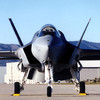
洛克希德·马丁公司开发的联合战斗机 X-35B 在美国加州爱德华空军基地展示了同次飞行中向STOVL 模式的转变且保持超音速飞行。
该机爬升到9000英尺时,推进系统成功地达到了180节,然后加速至1.08马赫,这是JSF飞机首次在同次飞行中实现了向STOVL模式的转变且保持超音速度。
此飞机在2500英尺高空,94华氏度下完成了垂直起飞,盘旋和降落的任务。
洛克希德·马丁公司正在和波音公司竞争为美国和英国制造JSF机型,美国政府将在今年秋天决定采用哪家公司的产品
洛克希德·马丁公司的联合攻击战斗机X-35短程起飞和垂直降落验证机7月16日以成功地在爱德华空军基地垂直降落而完成了它的政府要求的试验。
试飞员Simon Hargreaves说,X-35B验证机在性能上没有任何瑕疵,它进行了短程起飞,由悬停(wingborne)至水平飞行(airborne)的过渡和垂直降落。垂直降落极平稳,它是周末飞行试验的最后一项,飞机以其短程起飞和垂直降落系统连续地取得比较低的飞行速度。
洛克希德·马丁公司计划继续进行X-35B验证机的试验。来自美海军陆战队和英国空军的飞行员将最早在本周在此飞机上作某些其它试验。
X-35B验证机使用了一种非常有特色的推进系统。此系统的发动机为普拉特·惠特尼公司的JSF119-611。发动机的传动轴驱动罗尔斯·罗伊斯公司的对转起升风扇,在短程起飞和垂直降落操作期间产生冷空气升力。
洛克希德·马丁公司已与诺思罗普·格鲁曼公司和BAE系统公司结伙来与波音公司竞争联合攻击战斗机的合同。此合同预计在今年10月签署。联合攻击战斗机预计用于美海军陆战队、英国空军和海军。
仅美国五角大楼就想在以后的几十年中采购此机多达3000架,总合同额达5000亿美元。
X-35B Vertical Landing from Wingborne Flight
The supersonic Lockheed Martin Joint Strike Fighter X-35B made a successful short takeoff, transitioned back from wingborne to jetborne flight and made a picture-perfect vertical landing at Edwards Air Force Base on July 16, 2001.
The soft touchdown followed a series of weekend flights in which the X-35B achieved successively slower speeds with its short takeoff/vertical landing (STOVL) system activated. The aircraft also executed several successful short takeoffs and slow landings.
Again, the X-35B performed flawlessly, and the vertical landing was extraordinarily smooth and easy, said Simon Hargreaves of BAE SYSTEMS, chief test pilot for the X-35B. We were in familiar territory, since we had already demonstrated the airplane s solid and stable hovering ability numerous times last month. The aircraft s shaft-driven lift fan propulsion system produces enormous amounts of power, even in the California desert with its high elevation and hot temperatures.
We also found that our vertical propulsion system provides a tenfold decrease in the hot exhaust that an aircraft reingests, as compared to other vertical propulsion systems. All this gives you a real safety margin during vertical operations.
Late last month, the aircraft completed 17 vertical takeoffs, hovers and vertical landings at the Lockheed Martin plant in Palmdale, Calif. On July 9, it performed a STOVL conversion, a mid-air refueling and supersonic dash in the same flight.
The X-35B has now successfully completed short takeoffs, transitions between wingborne and jet borne flight, hovers, vertical landings, and has flown supersonic, all profound achievements that literally define the baseline flight requirements of the Joint Strike Fighter, said Tom Burbage, executive vice president and general manager of the Lockheed Martin JSF program. The aircraft performed all of these missions without any modifications - that s truly a testament to the talent and hard work of the Lockheed Martin X-35 team.
The X-35B features a unique propulsion system in which a drive shaft from the Pratt Whitney JSF119-611 engine (common to all Lockheed Martin JSF variants) turns a counterrotating lift fan that produces cool-air lifting force during STOVL operations. The Rolls-Royce fan, actuated by a clutch that can be engaged at any power setting, works in concert with an articulating rear duct and under-wing lateral-control nozzles to lift the aircraft with nearly 40,000 pounds of vertical force. Because the fan amplifies the engine s power, the engine is able to run cooler and with less strain, increasing reliability and extending service life. The lift fan provides the propulsion system with about 15,000 pounds more thrust than the engine alone could generate.
We ve proven today that we ve overcome the limitations of legacy vertical propulsion, said Blot, one of the first Marine test pilots for the legacy Harrier program and later the manager of that program. As that era ends, we now can introduce a successful, revolutionary propulsion and combat system suited for the next 30 years of STOVL and conventional operations.