
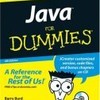
《傻瓜系列教程--Java第4版》(Java.For.Dummies.4th.Edition)
电驴资源
| 用户共享的电驴资源列表 | |
|---|---|
| [傻瓜系列教程--Java第4版].For.Dummies.Java.For.Dummies.4th.Edition.Dec.2006.pdf | 8.06 MB |
| 8.06 MB | |
电驴资源简介
中文名: 傻瓜系列教程--Java第4版英文名: Java.For.Dummies.4th.Edition发行时间: 2006年12月对白语言: 英语简介:
Wiley Publishing出版的For Dummies系列计算机入门图书之一。
书中使用的是SUN公司最新发布的java 1.6版本的JDK,并结合JCreator软件进行了实例分析。是一本不错的Java入门图书。
Start building powerful programs with Java 6—fast
Get an overview of Java 6 and begin building your own programs
Even if you’re new to Java programming—or to programming in general—you can get up and running on this wildly popular language in a hurry. This book makes it easy From how to install and run Java to understanding classes and objects and juggling values with arrays and collections, you will get up to speed on the new features of Java 6 in no time.
Discover how to
Use object-oriented programming
Work with the changes in Java 6 and JDK 6
Save time by reusing code
Mix Java and Javascript with the new scripting tools
Troubleshoot code problems and fix bugs
All on the bonus CD-ROM
Custom build of JCreator and all the code files used in the book
Bonus chapters not included in the book
Trial version of Jindent, WinOne, and NetCaptor freeware
Part I: Getting Started
Chapter 1: All about Java
Chapter 2: Running Canned Java Programs
Chapter 3: Using the Basic Building Blocks
Part II: Writing Your Own Java Programs
Chapter 4: Making the Most of Variables and Their Values
Chapter 5: Controlling Program Flow with Decision-Making Statements
Chapter 6: Controlling Program Flow with Loops
Part III: Working with the Big Picture:Object-Oriented Programming
Chapter 7: Thinking in Terms of Classes and Objects
Chapter 8: Saving Time and Money: Reusing Existing Code
Chapter 9: Constructing New Objects
Part IV: Savvy Java Techniques
Chapter 10: Putting Variables and Methods Where They Belong
Chapter 11: Using Arrays and Collections to Juggle Values
Chapter 12: Looking Good When Things Take Unexpected Turns
Part V: The Part of Tens
Chapter 13: Ten Ways to Avoid Mistakes
Chapter 14: Ten Sets of Web Resources for Java
Appendix A: Using the CD-ROM
Index
Bonus Content on the CD
Chapter 15: Sharing Names among the Parts of a Java Program
Chapter 16: Responding to Keystrokes and Mouse Clicks
Chapter 17: Writing Java Applets
Chapter 18: Using Java Database Connectivity
Appendix B: When to Use Words like “public” and “private