
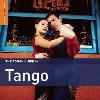
V.A -《概略的探戈指南 2CD》(The Rough Guide To Tango)[World Music Network RGNET-1219][FLAC]
电驴资源
| 用户共享的电驴资源列表 | |
|---|---|
| V.A.-.[The.Rough.Guide.to.Tango.2CD].专辑.(FLAC).rar | 583.92 MB |
| 583.92 MB | |
电驴资源简介
简介:

专辑介绍:
Born in the shady bordellos and swinging clubs of Buenos Aires, Tango has become one of the world's best loved dance styles. This Rough Guide is the perfect introduction for armchair and dancefloor fans alike. This Special Edition includes the album Narcotango 2 by Carlos Libedinsky, an Argentine musician, composer and producer most renowned for his neo-tango project, Narcotango.
When it comes to Argentina, to talk of 'revival' is perhaps to invite disaster. The history ot the country is of boom and bust, glory and infamy, creativity and corruptibility. While the country's artistic energies have often been résilient even while economic and political realities have been miserable, there have been many periods when the simple shortage ot disposable pesos has led to a dwindling in culture and entertainment.
Tango has risen to prominence several times. Its genesis, around 1870, reflected the emergence of the unified nation following a period of civil war. However, its first real boom came in the early 1900s, when Buenos Aires was remodelled in préparation for the first centenary of Independence by city mayor Torcuato de Alvear. The dance was exported to Paris, along with many great orchestras, and when the European demimonde embraced tango, Argentina was ready to reimport it.
The first orchestras to make it big locally were those led by Roberto Firpo, Osvaldo Fresedo and Francisco Canaro. These are known as the Guardia Vieja or 'old guard', and between 1905 and 1915 they were responsible for transforming the tango from a subculture into a popular form that appealed to ail social classes. In 1917, Carlos Gardel recorded a tango song, La Noche Triste', and set in motion another boom decade, now in the tango canción scene. He can be considered part of this 'old guard' and his iconic status is in part due to his belonging to a golden age, in material as well as musical terms.
In the 1930s, a Guardia Nueva or new guard' evolved, starring the likes of Osvaldo Pugliese, Aníbal Troilo, Horacio Salgán and the young Astor Piazzolla. The music became less rigid and more harmonie, and the soloists were given the freedom to flex the melody across the basic rhythm. Arrangements became more sophisticated and layered, and where the first-generation bandleaders had aped the rootsy, rhythmic aspects of early blues, the younger sophisticates of the Guardia Nueva looked to jazz and jazz fusion.
With the riseof Peronism in the 1950s, Argentinian tango began to wane as a social phenomenon. A succession of military governments left little room for a bohemian nightlife scene, and many of the country's most talented performers went into retirement or into exile. Pugliese, Salgán and Troilo continued to play, but the most talented of the fangueros, Astor Piazzolla, went to Italy and New York in search of new audiences and new ideas. Like so many of the most creative individuáis in postwar Argentina, he flourished in exile and created a tango nuevo that was internationalst and anti-establishment in spirlt.