
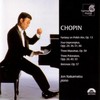
Jon Nakamatsu -(肖邦 Chopin:波兰空气里的幻想:四即兴曲, 三玛祖卡 (Chopin: Fantasy on Polish Airs; Four Impromptus; Three Mazurkas) )[FLAC]
电驴资源
| 用户共享的电驴资源列表 | |
|---|---|
| Jon.Nakamatsu.rar | 239.62 MB |
| 239.62 MB | |
电驴资源简介
专辑英文名: 肖邦 Chopin:波兰空气里的幻想:四即兴曲, 三玛祖卡 (Chopin: Fantasy on Polish Airs; Four Impromptus; Three Mazurkas) 艺术家: Jon Nakamatsu古典类型: 室内乐资源格式: FLAC发行时间: 1998年地区: 美国简介:

http://www.amazon.com/Chopin-Fantasy-Polis...2&sr=8-3

一看姓氏就知道是日本人,但是在wikipedia上他的页面没有日文版的,从而也无从得知姓氏的汉字写法是怎样的,请知道的朋友指教一下。
此人生在加州,今年已经41岁了。直到1997年获得范·克利本钢琴大赛金奖(为1981年以来第一名获此奖的美国人)方才成名,可谓大器晚成——如果能成大器的话。令人称奇的是,他从未有在任何正规音乐学院学习的经历,惟一的艺术类文凭居然是2000年在一个社区学院取得的。上的大学倒是如雷贯耳——斯坦福,不过本科是学德语的,然后又继续在斯坦福拿了个教育硕士,随后在一所高中教德语。他是如何能在业余性质的学习中达到如此高的钢琴水准的,就连官方网站上的传记都语焉不详。他的启蒙老师是Marina Derryberry,曾经跟Karl Ulrich Schnabel(牛人,是伟大的钢琴家Artur Schnabel的儿子,带出了红得发紫的Murray Perahia)学习过,在南加大勋伯格研究所和Leonard Stein学习作曲和配器。
获得范奖之后,Nakamatsu自然地结束了票友生涯,走上了梦寐以求的职业钢琴家之路。他的足迹遍及纽约、华盛顿、波士顿、芝加哥、巴黎、伦敦、米兰,当然还有故国的东京。在98-99音乐季,他在白宫克林顿夫妇主持的一场音乐会上演奏了可能是美国人民最熟悉的钢琴曲:乔治·格什温的《蓝色狂想曲》。这个荣誉大概和在NFL超级碗决赛唱美国国歌差不多吧。
其实注意到这个人,是因为他在9月22日将在本城举办音乐会,弹非常流行的拉赫马尼诺夫第三钢琴协奏曲,正因其流行,大师的经典版本无数,所以弄出点名堂来,也就尤其地难。Nakamatsu选择拉三,是颇需要一些勇气的。
看了这个典型的美国式的励志故事,我的第一点感叹,就是“牛人就是牛人”。他6岁开始学琴,可以说是相当地晚。估计他的父母也是抱着培养孩子兴趣的想法来让他学钢琴的,日本家庭大概也跟中国人一样,总想着让孩子学点什么东西。他长大之后也没有以钢琴为职业,但是居然能在如此长的时间里坚持不辍,一直完善提高着自己的钢琴技艺;以28岁“高龄”,仍然有心报名参加范赛,类似于年过花甲的老太太参加钢琴考级。要知道范赛可不是闹着玩的,这个比赛是能和柴可夫斯基(郎朗在此成名)和肖邦(李云迪在此成名)大赛媲美的国际最高水平的钢琴竞赛,但是一个连音乐学院都没上过的28 岁的叔叔却最终折桂,那些希望借此一举成名的小神童、少俊杰们肯定都羞愧得无地自容了。
第二点感叹,便是在音乐行内混饭的不易。古典音乐的唱片店里面,黄色的DG、红色的EMI自然是最吸引眼球的厂牌,PHILIPS、SONY、BMG等也不遑多让,但是对于“Harmonia Mundi”这样的标志,我相信一般的乐迷都不会给予太多的关注,更何况这种小厂牌在大卖场出现的机会是微乎其微的呢。Nakamatsu就是和这家厂商签的约。我相信成为一流大厂旗下的艺术家,必然也是他的一个梦想,但是他肯定也清楚地知道,这个目标,有生之年怕是很难实现了,虽然他已经在卡内基和肯尼迪留下了自己的痕迹。实际上,这些小公司的艺术家中,肯定不乏才华出众的人,但是由于各种原因,不入“梦工厂”星探们的法眼。Nakamatsu已经很幸运了,在amazon上有他的唱片出售,也有几篇为之助威的review,但是真正去买的人,又会有多少呢?还有更多的无法得到任何厂商青睐的音乐家们呢?这种金字塔式的产业,都免不了让人顿生“一将功成万骨枯”之叹,比如职业体育(想想在意丙英乙之类联赛混饭的球员和教练们)、娱乐界(超女复活赛被淘汰的女孩们)、还有我们的学术界。
The Keys to Carnegie Hall
Winning the Van Cliburn gold medal gets your foot in the door.
by Ginny McCormick
PIANO MAN: Nakamatsu doesn’t have to moonlight his sonatas anymore.
Every so often Jon Nakamatsu has to pinch himself. Is he really a concert pianist touring the globe and performing at Carnegie Hall? An artist whose work has been described by a New York Times critic as “powerful” and “sweetly poetic?” The performer who received plaudits from Reader’s Digest -- in company with a story on James Michener?
Don’t blame Nakamatsu for wondering. Just last year, he was spending nights at home grading papers and days drilling Mountain View high school students in the rigors of German grammar. A teacher for six years, he played piano only after hours.
All that changed in May 1997, when Nakamatsu, ’91, MEd ’92, won the Van Cliburn International Piano Competition, besting heavily favored Russian and Israeli finalists. Just entering the world’s highest-profile piano playoff took nerve: he’d never studied at a conservatory -- unheard of for a Cliburn hopeful. Four years earlier, he’d made a run for this musical equivalent of Olym-pic gold and hadn’t survived the first cut. This would be his last chance to slip in under the contest’s age-30 cutoff. “My only goal was to make the semifinals,” Nakamatsu told reporters in Fort Worth, Texas, after he won. Asked what he had to say to his St. Francis High School students, he quipped, “Auf Wiedersehen!”
Nakamatsu says he was stunned by the standing ovations he received during the two-week competition in Texas. Fans gave him a toy armadillo for luck.
Part of their fascination was his underdog status: Americans rarely prevail at the Cliburn. Indeed, it looked like Nakamatsu didn’t stand a chance when, at the finals, Russian pianist Yakov Kasman preceded him onstage, playing the same piece Nakamatsu had chosen. By all accounts, the Russian’s thunderous, emotional rendition of Rachmaninoff’s Concerto No. 3 brought the house down -- a daunting act for the small, serene American to top. But Nakamatsu won over the jury of 12, who unanimously made him the first American winner in 16 years. “It was among those near-sacred occasions when lightning pauses long enough to be captured in a bottle,” gushed Tim Madigan of the Fort Worth Star-Telegram.
The prize opened doors. Besides winning $20,000 in cash and a $10,000 wardrobe allowance, Cliburn medalists are sent on a two-year concert tour in the United States and Europe. They play with orchestras and chamber groups and give solo recitals, capped by a date at Carnegie Hall.
So far, Nakamatsu has fulfilled more than 100 engagements from Munich to Milwaukee -- and he gets three or four interview requests for each performance. Even so, he squeezed in a campus visit between his debut at London’s Queen Elizabeth Hall and a date with the Brentano String Quartet in Southern California.
He has a performer’s poise, but doesn’t put on airs. Asked to recount a typical day, he laughs: “There’s no such thing!” In some ways, the past year has been a blur -- relentless travel, hopping from hotel to hotel, and a steady diet of pasta, which he favors for energy. The pace is sometimes maddening. “It was frustrating to see London only from the window of a cab,” he says. And once a scheduling snag resulted in back-to-back performance days with a night on the road -- instead of in bed. “I found out that I could do a concert on no sleep,” he grins. Then there was the stormy day last March when he arrived on time in Chicago, but his formal attire did not. “Nakamatsu appeared, to wild applause, in blue jeans and a dress shirt,” reported the Chicago Tribune critic. “[He] made a hit, in fact, before playing a note.”
Nakamatsu’s switch from blackboard to keyboard was an improbable career move. True, he’d been consumed with music from the age of 4, when he went to daycare and was instantly smitten with the first piano he’d ever seen. “There was no music in our house,” he muses. “My grandmother still hasn’t ever heard me play!” When he was 6, his parents bought a piano and enrolled him in lessons. But as diligent and talented as their son proved to be, they didn’t want him thinking of music as a career. It was far too risky.
So Nakamatsu set aside his dream of studying at a conservatory. But he kept up lessons with his childhood teacher in Sunnyvale, Marina Derryberry. A conservatory graduate herself, she remains his coach today. Nakamatsu credits her with keeping his hopes for a music career alive, but even she admits that she “didn’t expect he’d win” in Texas.
When it came time for college, Nakamatsu chose Stanford but not Stanford music. He majored in German studies, then earned a teaching degree. In addition to working with Derryberry, he gave recitals, played chamber music with other musicians and practiced, practiced, practiced. “It was like doing a double major,” he says, “except one led to a degree and the other didn’t.”
Nakamatsu’s hopes were fanned in 1991 and again in 1995, when he won the National Chopin Competition. He played at the Kennedy Center in Washington, D.C., and at New York’s Lincoln Center. Nevertheless, concert managers told him that he’d have to win a major international competition to entertain any hope of playing piano for a living.
Even winning the Cliburn doesn’t guarantee a concert career. According to Maria Guralnik, manager of the Van Cliburn Foundation, classical piano performance is a shrinking field, where too many players chase too few opportunities. Cliburn medalists typically join a big management company after their two busy seasons, then play 25 concerts the first year, 10 the second and none the third. Most newcomers simply get lost in the crowd of established virtuosos.
None of which fazes the 10th Cliburn winner. He’s treating these two years as “an experiment” -- to see what the world thinks of Jon Nakamatsu, and what he thinks of the world he always dreamed of. Halfway through the test, he’s upbeat. “I’ve discovered that I can do it and that I want to do it.”
At this point, the music world seems to agree that Nakamatsu just might beat the odds. He’s received a sheaf of encouraging reviews and has been tapped to substitute for classical superstar Vladimir Ashkenazy at two concerts in Brazil. His datebook is filling up with return engagements well beyond the Cliburn calendar. Maria Guralnik calls the international media attention “unprecedented.” Harmonia Mundi signed him for a solo Chopin CD -- “and this is not usual,” says Guralnik.
For now, Nakamatsu is enjoying his tour -- and suffering uncharacteristic stage fright as he prepares for a December engagement in Hawaii. There’ll be someone in the audience at the Honolulu Symphony he’s determined to impress -- his grandmother.
http://www.amazon.com/Chopin-Fantasy-Polis...2&sr=8-3
一看姓氏就知道是日本人,但是在wikipedia上他的页面没有日文版的,从而也无从得知姓氏的汉字写法是怎样的,请知道的朋友指教一下。
此人生在加州,今年已经41岁了。直到1997年获得范·克利本钢琴大赛金奖(为1981年以来第一名获此奖的美国人)方才成名,可谓大器晚成——如果能成大器的话。令人称奇的是,他从未有在任何正规音乐学院学习的经历,惟一的艺术类文凭居然是2000年在一个社区学院取得的。上的大学倒是如雷贯耳——斯坦福,不过本科是学德语的,然后又继续在斯坦福拿了个教育硕士,随后在一所高中教德语。他是如何能在业余性质的学习中达到如此高的钢琴水准的,就连官方网站上的传记都语焉不详。他的启蒙老师是Marina Derryberry,曾经跟Karl Ulrich Schnabel(牛人,是伟大的钢琴家Artur Schnabel的儿子,带出了红得发紫的Murray Perahia)学习过,在南加大勋伯格研究所和Leonard Stein学习作曲和配器。
获得范奖之后,Nakamatsu自然地结束了票友生涯,走上了梦寐以求的职业钢琴家之路。他的足迹遍及纽约、华盛顿、波士顿、芝加哥、巴黎、伦敦、米兰,当然还有故国的东京。在98-99音乐季,他在白宫克林顿夫妇主持的一场音乐会上演奏了可能是美国人民最熟悉的钢琴曲:乔治·格什温的《蓝色狂想曲》。这个荣誉大概和在NFL超级碗决赛唱美国国歌差不多吧。
其实注意到这个人,是因为他在9月22日将在本城举办音乐会,弹非常流行的拉赫马尼诺夫第三钢琴协奏曲,正因其流行,大师的经典版本无数,所以弄出点名堂来,也就尤其地难。Nakamatsu选择拉三,是颇需要一些勇气的。
看了这个典型的美国式的励志故事,我的第一点感叹,就是“牛人就是牛人”。他6岁开始学琴,可以说是相当地晚。估计他的父母也是抱着培养孩子兴趣的想法来让他学钢琴的,日本家庭大概也跟中国人一样,总想着让孩子学点什么东西。他长大之后也没有以钢琴为职业,但是居然能在如此长的时间里坚持不辍,一直完善提高着自己的钢琴技艺;以28岁“高龄”,仍然有心报名参加范赛,类似于年过花甲的老太太参加钢琴考级。要知道范赛可不是闹着玩的,这个比赛是能和柴可夫斯基(郎朗在此成名)和肖邦(李云迪在此成名)大赛媲美的国际最高水平的钢琴竞赛,但是一个连音乐学院都没上过的28 岁的叔叔却最终折桂,那些希望借此一举成名的小神童、少俊杰们肯定都羞愧得无地自容了。
第二点感叹,便是在音乐行内混饭的不易。古典音乐的唱片店里面,黄色的DG、红色的EMI自然是最吸引眼球的厂牌,PHILIPS、SONY、BMG等也不遑多让,但是对于“Harmonia Mundi”这样的标志,我相信一般的乐迷都不会给予太多的关注,更何况这种小厂牌在大卖场出现的机会是微乎其微的呢。Nakamatsu就是和这家厂商签的约。我相信成为一流大厂旗下的艺术家,必然也是他的一个梦想,但是他肯定也清楚地知道,这个目标,有生之年怕是很难实现了,虽然他已经在卡内基和肯尼迪留下了自己的痕迹。实际上,这些小公司的艺术家中,肯定不乏才华出众的人,但是由于各种原因,不入“梦工厂”星探们的法眼。Nakamatsu已经很幸运了,在amazon上有他的唱片出售,也有几篇为之助威的review,但是真正去买的人,又会有多少呢?还有更多的无法得到任何厂商青睐的音乐家们呢?这种金字塔式的产业,都免不了让人顿生“一将功成万骨枯”之叹,比如职业体育(想想在意丙英乙之类联赛混饭的球员和教练们)、娱乐界(超女复活赛被淘汰的女孩们)、还有我们的学术界。
The Keys to Carnegie Hall
Winning the Van Cliburn gold medal gets your foot in the door.
by Ginny McCormick
PIANO MAN: Nakamatsu doesn’t have to moonlight his sonatas anymore.
Every so often Jon Nakamatsu has to pinch himself. Is he really a concert pianist touring the globe and performing at Carnegie Hall? An artist whose work has been described by a New York Times critic as “powerful” and “sweetly poetic?” The performer who received plaudits from Reader’s Digest -- in company with a story on James Michener?
Don’t blame Nakamatsu for wondering. Just last year, he was spending nights at home grading papers and days drilling Mountain View high school students in the rigors of German grammar. A teacher for six years, he played piano only after hours.
All that changed in May 1997, when Nakamatsu, ’91, MEd ’92, won the Van Cliburn International Piano Competition, besting heavily favored Russian and Israeli finalists. Just entering the world’s highest-profile piano playoff took nerve: he’d never studied at a conservatory -- unheard of for a Cliburn hopeful. Four years earlier, he’d made a run for this musical equivalent of Olym-pic gold and hadn’t survived the first cut. This would be his last chance to slip in under the contest’s age-30 cutoff. “My only goal was to make the semifinals,” Nakamatsu told reporters in Fort Worth, Texas, after he won. Asked what he had to say to his St. Francis High School students, he quipped, “Auf Wiedersehen!”
Nakamatsu says he was stunned by the standing ovations he received during the two-week competition in Texas. Fans gave him a toy armadillo for luck.
Part of their fascination was his underdog status: Americans rarely prevail at the Cliburn. Indeed, it looked like Nakamatsu didn’t stand a chance when, at the finals, Russian pianist Yakov Kasman preceded him onstage, playing the same piece Nakamatsu had chosen. By all accounts, the Russian’s thunderous, emotional rendition of Rachmaninoff’s Concerto No. 3 brought the house down -- a daunting act for the small, serene American to top. But Nakamatsu won over the jury of 12, who unanimously made him the first American winner in 16 years. “It was among those near-sacred occasions when lightning pauses long enough to be captured in a bottle,” gushed Tim Madigan of the Fort Worth Star-Telegram.
The prize opened doors. Besides winning $20,000 in cash and a $10,000 wardrobe allowance, Cliburn medalists are sent on a two-year concert tour in the United States and Europe. They play with orchestras and chamber groups and give solo recitals, capped by a date at Carnegie Hall.
So far, Nakamatsu has fulfilled more than 100 engagements from Munich to Milwaukee -- and he gets three or four interview requests for each performance. Even so, he squeezed in a campus visit between his debut at London’s Queen Elizabeth Hall and a date with the Brentano String Quartet in Southern California.
He has a performer’s poise, but doesn’t put on airs. Asked to recount a typical day, he laughs: “There’s no such thing!” In some ways, the past year has been a blur -- relentless travel, hopping from hotel to hotel, and a steady diet of pasta, which he favors for energy. The pace is sometimes maddening. “It was frustrating to see London only from the window of a cab,” he says. And once a scheduling snag resulted in back-to-back performance days with a night on the road -- instead of in bed. “I found out that I could do a concert on no sleep,” he grins. Then there was the stormy day last March when he arrived on time in Chicago, but his formal attire did not. “Nakamatsu appeared, to wild applause, in blue jeans and a dress shirt,” reported the Chicago Tribune critic. “[He] made a hit, in fact, before playing a note.”
Nakamatsu’s switch from blackboard to keyboard was an improbable career move. True, he’d been consumed with music from the age of 4, when he went to daycare and was instantly smitten with the first piano he’d ever seen. “There was no music in our house,” he muses. “My grandmother still hasn’t ever heard me play!” When he was 6, his parents bought a piano and enrolled him in lessons. But as diligent and talented as their son proved to be, they didn’t want him thinking of music as a career. It was far too risky.
So Nakamatsu set aside his dream of studying at a conservatory. But he kept up lessons with his childhood teacher in Sunnyvale, Marina Derryberry. A conservatory graduate herself, she remains his coach today. Nakamatsu credits her with keeping his hopes for a music career alive, but even she admits that she “didn’t expect he’d win” in Texas.
When it came time for college, Nakamatsu chose Stanford but not Stanford music. He majored in German studies, then earned a teaching degree. In addition to working with Derryberry, he gave recitals, played chamber music with other musicians and practiced, practiced, practiced. “It was like doing a double major,” he says, “except one led to a degree and the other didn’t.”
Nakamatsu’s hopes were fanned in 1991 and again in 1995, when he won the National Chopin Competition. He played at the Kennedy Center in Washington, D.C., and at New York’s Lincoln Center. Nevertheless, concert managers told him that he’d have to win a major international competition to entertain any hope of playing piano for a living.
Even winning the Cliburn doesn’t guarantee a concert career. According to Maria Guralnik, manager of the Van Cliburn Foundation, classical piano performance is a shrinking field, where too many players chase too few opportunities. Cliburn medalists typically join a big management company after their two busy seasons, then play 25 concerts the first year, 10 the second and none the third. Most newcomers simply get lost in the crowd of established virtuosos.
None of which fazes the 10th Cliburn winner. He’s treating these two years as “an experiment” -- to see what the world thinks of Jon Nakamatsu, and what he thinks of the world he always dreamed of. Halfway through the test, he’s upbeat. “I’ve discovered that I can do it and that I want to do it.”
At this point, the music world seems to agree that Nakamatsu just might beat the odds. He’s received a sheaf of encouraging reviews and has been tapped to substitute for classical superstar Vladimir Ashkenazy at two concerts in Brazil. His datebook is filling up with return engagements well beyond the Cliburn calendar. Maria Guralnik calls the international media attention “unprecedented.” Harmonia Mundi signed him for a solo Chopin CD -- “and this is not usual,” says Guralnik.
For now, Nakamatsu is enjoying his tour -- and suffering uncharacteristic stage fright as he prepares for a December engagement in Hawaii. There’ll be someone in the audience at the Honolulu Symphony he’s determined to impress -- his grandmother.