
《BBC:南回归线》(BBC:Tropic Of Carpricorn)
电驴资源
| 用户共享的电驴资源列表 | |
|---|---|
| [BBC南回归线].BBCTropic.Of.Capricorn.S01E01.avi | 481.12 MB |
| [BBC南回归线].BBCTropic.Of.Capricorn.S01E02.avi | 479.57 MB |
| [BBC南回归线].BBCTropic.Of.Capricorn.S01E03.avi | 474.53 MB |
| [BBC南回归线].BBCTropic.Of.Capricorn.S01E04.avi | 476.15 MB |
| 1.87 GB | |
电驴资源简介
简介:

西蒙里夫
十个国家中,五个沙漠和一个巨大的山脉。这是西蒙的最艰难的挑战,但 - 但什么是南回归线?
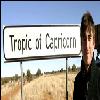
作家和旅行家西蒙里夫刚刚完成了他最大的挑战尚未出来 - 环绕周围的南回归线,在热带区南部限制的世界。他讲述了他最近的史诗般的旅程迈克尔执事
西蒙里夫正在成为电视的经验丰富的旅行者之一,但这并不意味着世界上正在运行的方式,令他喜出望外了。在马达加斯加拍摄他的最新BBC系列,他敦促他的向导 - 对马达加斯加的皇室成员,没少 - 品尝当地美味佳肴。 '这是巨人阴茎汤,'他回忆说。 '这对瘤牛,这是一种对亚洲牛阴茎。而它确实是巨大的阴茎。最不愉快的美食体验之一我有',这意味着它必须味道确实不错:。这些都是一个人谁,在其他国家,吃干毛虫,烤骆驼和羊的眼睛的话。
有问题的系列南回归线,于上周日开始BBC2。 2006年,里夫提出了一系列名为赤道游记,他在追查赤道绕地球,会议和有关的人谁是在国家,经过现场学习。南回归线是后续种类:这一次,他的行迹痕最南端的纬度,太阳直射出现在中午。或者说更简单:在阿特拉斯,通过南美洲,非洲南部和澳大利亚传递路线。
'我花了一轮精彩的世界,我认为是区域在每个人的心灵的最前沿没有,'说,35岁的记者。 '这对世界上最干旱的地区之一 - 有在纳米比亚和博茨瓦纳,智利的阿塔卡马沙漠中的卡拉哈里沙漠。但是,它有多种,以及:在南美洲,马达加斯加,莫桑比克美的安第斯山脉'。
但里夫的目的不是简单地惊叹的景观。他的主要兴趣是在当地人民:他们的历史,他们的战斗,他们的文化。在博茨瓦纳,在第一集中,他遇到了新部落 - 更好地为卡拉哈里布须曼人知道 - 并学习如何在国家的政府已经赶进'安置营地,他们企图,迫使他们成为现代的一部分世界,而不是继续其传统的部落方式。在第二集,他吓坏了拼命逃离了摇摇欲坠的国家津巴布韦视线,争取他们通过铁丝网的方式跨越边界进入南非。
然后还有更古怪的人物。采取'Catman',里夫在纳米比亚人接触。 'Catman'是谁巡游法国保育农田,喂养,在农民被枪杀的危险,如果他们攻击家畜野生猎豹。里夫加入了一个典型的远征他 - 两人很快就发现自己被咆哮的野兽包围。在屏幕上,赫然里夫看起来沉着。
'当有一个对你电视摄像机,它鼓励你成为一个比你勇敢一点,自然,'他说。不过这也造成这种安全的错觉。我还记得我们飞过巴拉圭,并即将降落在草地跑道上我们的小飞机。它有一个羊。我转过身来相机和说,然后是我大脑中去了,“哈哈,有一个在跑道上的羊。”“等一等 - 我们可能会死!”幸运的是飞行员撤回了他的控制,我们只是呼啸而过在羊的顶部。'
在他的其他的职业,作为一个作家,里夫已取得了一些经验,更让人迷惑。他是第一位西方记者写一个基地组织:他刚开始的世界贸易中心于1993年,当时他才21岁轰炸研究关于它的书。新豺狼:拉姆齐优素福,乌萨马本拉丹和对恐怖主义的未来是1998年出版。他写的'花生',没有人买了它。直到,当然,9 / 11。
'只要新闻办公桌开始键入“奥萨马本拉登”成亚马逊的搜索框,但实际上只是一书,出现了,'他说。 '突然我有一个bazillion电视台的工作人员在单位把我住在多年以前,更不用说房子我目前所在的机器大媒体生活需要喂食了,他们需要的人可以谈论谁基地组织。问题是,我爸爸刚刚去世了。我是在发呆。'
里夫后的新闻节目作为一个基地组织的专家出场暴雪,英国广播公司委托,从他对中亚地区的系列,在危险区2003年的假期:符合施坦斯,和他的明星以来稳步上升。还有,他补充道,很多其他遥远的地方,他希望去探索。
'大多数人认为世界正变得非常samey,'他说',但还是有它的特殊部位,我们可以告诉人们,告诉他们,他们并没有听说过的故事。'
Simon reeve
Ten countries, five deserts and one giant mountain range. It is Simon's toughest challenge yet - but just what is the Tropic of Capricorn?
Author and traveller Simon Reeve has just completed his greatest challenge yet out - circling the world around the Tropic of Capricorn, the southern limit of the tropical zone. He tells Michael Deacon about his latest epic journey
Simon Reeve is becoming one of television’s seasoned travellers, but that doesn’t mean the world is running out of ways to surprise him. Filming in Madagascar for his latest BBC series, he was urged by his guide – a member of the Madagascan royal family, no less – to sample a local delicacy. ‘It was Giant Penis Soup,’ he recalls. ‘It’s the penis of the zebu, which is a kind of Asiatic cow. And its penis really is giant. One of the least pleasant culinary experiences I’ve had.’ Which means it must taste really bad: these are the words of a man who, in other countries, ate dried caterpillars, grilled llama and sheep’s eyes.
The series in question is Tropic of Capricorn, which starts on BBC2 on Sunday. In 2006, Reeve made a travelogue series called Equator, in which he traced the equator round the globe, meeting and learning about the people who live in the countries it passes through. Tropic of Capricorn is a kind of follow-up: this time he traces the line that marks the southernmost latitude at which the sun appears directly overhead at midday. Or to put it more simply: the line on the atlas that passes through South America, southern Africa and Australia.
‘It takes me round a fascinating region of the world that I think isn’t in the forefront of everyone’s mind,’ says the 35-year-old reporter. ‘It’s one of the most arid regions of the world – there’s the Kalahari desert in Namibia and Botswana, the Atacama desert in Chile. But it’s got variety as well: the Andes mountains in South America, Madagascar, the beauty of Mozambique.’
But Reeve’s purpose wasn’t simply to marvel at the landscape. His main interest was in the local peoples: their histories, their battles, their cultures. In Botswana, in the first episode, he meets the San tribe – better known as the Bushmen of the Kalahari – and learns how the country’s government has herded them into ‘resettlement camps’, in a bid to force them to become part of the modern world, rather than continue their traditional tribal ways. In the second episode, he’s horrified by the sight of Zimbabweans desperately fleeing their crumbling nation, fighting their way through razor wire to cross the border into South Africa.
Then there are the more eccentric characters. Take ‘Catman’, whom Reeve encounters in Namibia. ‘Catman’ is a French conservationist who prowls farmland, feeding wild cheetahs that are at risk of being shot by farmers if they attack livestock. Reeve joined him on a typical expedition – and the pair soon found themselves surrounded by roaring beasts. On screen, Reeve looks impressively unperturbed.
‘When there’s a TV camera on you, it encourages you to be a bit braver than you are naturally,’ he says. ‘But it also creates this illusion of safety. I remember we were flying across Paraguay and were about to land our tiny plane on a grassy runway. There was a sheep on it. I turned to the camera and said, “Ha ha, there’s a sheep on the runway.” And then a part of my brain went, “Hang on – we could die!” Luckily the pilot pulled back on his controls and we just whizzed over the top of the sheep.’
In his other career, as an author, Reeve has had some even more disorienting experiences. He was one of the first Western journalists to write about al-Qa’eda: he started to research a book about it just after the World Trade Centre bombings in 1993, when he was 21. The New Jackals: Ramzi Yousef, Osama bin Laden and the Future of Terrorism was published in 1998. He wrote it ‘for peanuts’ and nobody bought it. Until, of course, 9/11.
‘As soon as news desks started typing “Osama bin Laden” into Amazon’s search box, there was really only one book that popped up,’ he says. ‘Suddenly I had a bazillion TV crews turning up at flats I’d lived at years before, let alone the house I was currently living in. The big media machine needs feeding, and they needed people who could talk about al-Qa’eda. The thing is, my dad had just died too. I was in a daze.’
After Reeve’s blizzard of appearances as an al-Qa’eda expert on news programmes, the BBC commissioned a series from him on central Asia, 2003’s Holidays in the Danger Zone: Meet the Stans, and his star has risen steadily since. There are, he adds, many other far-flung places he wishes to explore.
‘Most people think the world is becoming very samey,’ he says, ‘but there are still extraordinary parts of it that we can show people, and tell them stories they haven’t heard before.’