
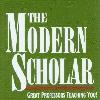
《TTc课程:二十世纪的乌托邦及其恐怖行为》(TTc - Utopia and Terror in the 20th Century)mkv[TVRip]
电驴资源
| 用户共享的电驴资源列表 | |
|---|---|
| [TTc课程:二十世纪的乌托邦及其恐怖行为].00.Professor.Bio.mkv | 1.45 MB |
| [TTc课程:二十世纪的乌托邦及其恐怖行为].01.Defining.Utopia.and.Terror.mkv | 232.76 MB |
| 234.21 MB | |
电驴资源简介
简介:

The Teaching Company 是一家制造全美国顶级教授演讲录音及录影的公司。这些教授在华盛顿特区外的一家特别的工作室录制这些课程,然后课程被转制成磁带、CD、DVD、MPEG-4、MP3等格式出售。
The Teaching Company公司由Thomas M. Rollins先生创建于 1990年,Thomas M. Rollins先生是美国前参议院委员会劳工及人力资源首席顾问,毕业于哈佛大学法学院。他在学习过程中注意到,使用录像带学习很有效率。于是他开始尝试发起一个政府项目,为公众制作磁带,但是由于法律的限制而无法实践。当他离任时,他抱着这个想法而开始搜寻顶级教授来制作课程,并且销售给公众。
截至2007年,这家公司共提供了超过260门课程,内容总时长达3000小时,跨越9门不同学科,分别是:商业学和经济学、艺术和音乐、古代史和中世纪史、近代史、文学和英语、哲学和思想史、宗教、科学和数学以及社会科学。
课程的目标是提供成人教育和终身教育,大学本科非专业的典型知识的教育;不仅如此,他还有一系列为高中生提供的课程。每一门课程都包括一些印有大纲、推荐书目、教授简介以及思考问题的补充小册子。此外,课程还提供全文的文本。
课程有多种不同的载体。起初,仅有磁带或是VHS录像带。后来,逐渐出现了CD及DVD版本,而现在也能下载到MP3版本。
2006年10月2日,这家公司被一家私募股权投资公司Brentwood Associates收购。
引用Course No. 8313 (24 lectures, 30 minutes/lecture) | English | MKV 712x478 29fps @672Kbps | MP3 128Kbps
Taught by Vejas Gabriel Liulevicius | University of Tennessee | Ph.D., University of Pennsylvania
From the trenches of World War I to Nazi Germany to Saddam Hussein's Iraq, the 20th century was a time of unprecedented violence. According to best estimates, in that 100-year span more than 200 million people were killed in world wars, government-sponsored persecutions, and genocides.
Such monumental violence seems senseless. But it is not inexplicable. And if we can understand its origins, we may prevent even greater horrors in the century to come.
This is the premise of Utopia and Terror in the 20th Century. Professor Vejas Gabriel Liulevicius traces the violent history of that era, beginning with its early roots in the American and, especially, the French revolutions. With each passing lecture, you will see how the 20th century's violence was the result of specific historical developments that eventually combined, with explosive results.
The Fuse that Made the 20th Century Explode
The French Revolution proved that ideological movements could mobilize the public and, when willing to use violence, could indeed transform society.
The Industrial Revolution and subsequent technology created vastly more powerful weapons—including some that were entirely new, such as the airplane and rocket—that raised the potential for bloodshed to new heights.
Charles Darwin's theory of natural selection was perverted into Social Darwinism and eugenics: racist pseudosciences that provided excuses to repress or eliminate entire groups of people.
These events created a dangerous backdrop for the most sinister development of all. This was the notion that utopia was not just a perfect paradise to look forward to in the afterlife. Instead, utopia could be built right now, in this life.
Such 20th-century ideologies as Marxism, Nazism, Communism, and Fascism embraced this idea willingly—even enthusiastically—and used terror to implement it. These ideologies functioned as political religions, demanding fanaticism, commitment, and sacrifice in return for an ultimate reward in this life rather than the next.
Understanding Totalitarian Governments: Gangsters and Machines
Professor Liulevicius offers an intellectual framework though which to understand the totalitarian governments of the last century or, for that matter, of today. Such governments, and the terror they spread, share key characteristics and strategies.
For example, their leaders can be seen not as politicians but as mobsters, an organized conspiracy that uses criminal methods inspired by gangsters. They gain and maintain power by manipulating masses of people, often exploiting societies with many uprooted and alienated citizens, such as existed in Europe after World War I.
In addition, you will see that these regimes create fear and command allegiance through the use of machines. These are not literally machines, but bureaucracies that carry out a set of deliberate, interrelated strategies. These include:
* The cult of the leader, or the cult of personality. These make the dictator seem larger than life, or superhuman. After Italy annexed Ethiopia in 1936, Mussolini's followers declared him to be a new god in human form. In the Soviet Union, long ovations after Stalin's speeches were common, as no one wanted to be seen as the first to stop applauding.
* The Big Lie, or deliberate distortions of the truth. During the Hundred Flowers Campaign, Mao Zedong seemed to promote free speech, then killed some half million dissidents when they came out in the open.
* Secret police. An estimated 274,000 people worked with the East German secret police, the Stasi, from 1950 to 1989. When informers were added, this translated into one secret policeman for every 6.5 persons.
* The media. Radio, film, and television were used to rewrite history and manipulate the masses. The Bolsheviks produced documentary films that made their October Revolution seem much more dramatic and deadly than it was (a common joke was that more people were injured during filming than in the actual event).
The portrait Professor Liulevicius paints is that 20th-century violence, while horrific and massive, was not chaotic or random but deliberate and calculated. Very often, it was based on precedent.
In using concentration camps, Hitler and Stalin essentially adopted a strategy that had first been employed by the Spanish in 1896 in Cuba and by the British against Dutch settlers during the Boer War (1899–1902).
Hitler's plan to exterminate Germany's Jews was inspired by the 1915 genocide of Armenians by the Turkish Ottoman Empire, an atrocity barely noticed by the international community. The fact that no one remembered the Armenians, as Hitler is said to have declared, convinced him that his Final Solution would work.
Lessons Learned: A Hopeful Conclusion
In the final lectures, Professor Liulevicius considers recent figures such as Saddam Hussein and Osama bin Laden and assesses terrorism in the contemporary world. What is the future of terror? What lessons have been learned by the hard experience of the past century?
These questions hinge on several issues, including our attitudes toward human nature, our ability to remember and learn from past atrocities, and our use of technology. But an especially optimistic note is the notion of resistance. If the 20th century was plagued by repressive regimes, it was also blessed with those who resisted them.
Unlike the story of totalitarianism, which is about the state, the story of resistance is one of individuals who ignored personal risk to oppose violence. These witnesses to the century, as Professor Liulevicius calls them, include novelists George Orwell and Aleksander Solzhenitsyn, Polish labor leader Lech Walesa, Pope John Paul II, and political philosopher Hannah Arendt.
Course Lecture Titles
1. Defining Utopia and Terror
2. The Legacy of Revolutions
3. Omens of Conflict
4. World War I
5. Total War—Mobilization and Mass Death
6. Total Revolution in Russia
7. War's Aftermath—The Hinge of Violence
8. Communism
9. Stalin
10. Soviet Civilization
11. Fascism
12. The 1930's—The Low Dishonest Decade
13. Nazism
14. Hitler
15. World War II
16. Nazi Genocide and Master Plans
17. The Cold War
18. Mao
19. Cambodia and Pol Pot's Killing Fields
20. East Germany, the Soviet Union, North Korea
21. From the Berlin Wall to the Balkans
22. Rwanda
23. Saddam Hussein's Iraq
24. The Future of Terror
经AntiVir PersonalEdition Premium V9检测无毒。
常驻服务器:icupid
常驻时间段:00:00-08:00
小水管30kbps上传,刀疤天使+风之痕反吸血组合。
请耐心等待,多多分流!