
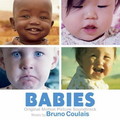
Bruno Coulais -《阳光宝贝》(Babies)Original Motion Picture Soundtrack[MP3]
电驴资源
| 用户共享的电驴资源列表 | |
|---|---|
| Bruno.Coulais.-.[Babies].专辑.(MP3).rar | 60.28 MB |
| 60.28 MB | |
电驴资源简介
简介:

资源码率:320k CBR
专辑介绍:
从北美洲的美国到亚洲的日本,再到非洲的纳米比亚和亚洲内陆的蒙古,《阳光宝贝》忠实地记录了四个婴儿从在妈妈的肚子里孕育,到呱呱落地的襁褓之中,再到走出其人生第一步的过程,当中夹杂了父母与亲友的喜怒哀乐,是一部相当值得为人父母者一看的电影。
法国作曲家布鲁诺·库列斯为本片创作配乐,女声清唱结合简洁活泼的音乐,风格:阳光,可爱 , 安详。
引用
“Soundtracks Examiner” Mark Morton:
On Babies, Bruno Coulais takes the listener back to a time when everything in the world was new; everything we experienced was a discovery. Upon an initial listen, his score to the documentary gives the impression that we are all living inside of a giant toy chest, a la Woody and Buzz. To a baby, that’s pretty much all that the world is – every object is a potential toy that must be explored through the obligatory taste-test.
And in order for Coulais to sonically depict a child’s sense of exploration, the score is rife with string-plucking and a wealth of non-traditional (and creative) percussive devices. It is not overtly complex – he retains each sound’s individual quality yet allows them to intermingle and coexist on the same plane; emphasizing an atmosphere of wonder.
Occasionally, the music is accompanied by fluffy, American folk-esque (see Joni Mitchell, et al.) female vocals that amplify innocence and drape a lullaby sensation over the piece.
Something very subtle that Coulais accomplishes with his theming is providing a sense that although infants come from different families (in different cultures, walks of life, etc.), they all share a common bond of experience – suggesting that if brought together, they could easily unite in their own tribal community. Although their minds are not yet fully developed, they subconsciously feel a sense of camaraderie.
It is a fun score that while depicting the relevance and importance of babies’ development; it does not take itself too seriously as a sophisticated piece of music. It really would not fit out of place in a nursery.
That said, Coulais’ understanding of Third Stream Jazz is commendably, especially evidenced in “Les Chutes,” which sounds like it would have fit right into the late 1950s/early 60s music landscape. When listening to Babies, you are almost obligated to check your insecurities at the door and let your imagination flow freely.