
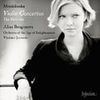
Alina Ibragimova -《孟德尔颂:小提琴协奏曲》( Mendelssohn - Violin Concertos )[flac + 24bits 96KHz 2.0][FLAC]
电驴资源
| 用户共享的电驴资源列表 | |
|---|---|
| Ibragimova.-.[Mendelssohn.-.Violin.Concertos].专辑.(Flac).flac | 248.46 MB |
| Ibragimova.-.[Mendelssohn.-.Violin.Concertos].专辑.(Flac).cue | 1.79 KB |
| Ibragimova.-.[Mendelssohn.-.Violin.Concertos].专辑.(Flac).rar | 1019.07 MB |
| 1.24 GB | |
电驴资源简介
| 资源介绍 |
| 专辑中文名: 孟德尔颂:小提琴协奏曲 |
| 语言: 英语 |
| 地区: 美国 |
简介:  专辑介绍: 孟德尔颂:小提琴协奏曲 BBC音乐杂誌五颗星 1829年七月,20岁的孟德尔颂刚结束在英国的乐季演出,与友人相邀前往苏格兰旅行,越过高原后两人抵达苏格兰西海岸并乘船造访穆尔岛北方的渔村。当天孟德尔颂便提笔写信给柏林的姊姊芳妮,说明当地的赫布里底群岛如何感动他,并附简单的乐谱草稿,虽然是钢琴总谱但却清楚标记管弦乐器的配置。这便是芬加尔洞窟序曲,亦称为赫布里底群岛序曲。孟德尔颂当下为眼前的壮丽景致所震摄,於是将风景巧妙细致的以浪漫时期的音乐语法化为声音的图像。这首序曲和他早期1820年代在柏林的学生时期风格也大不相同,这些作品大部分带有18世纪的保守风格,主要是受他的作曲老师柴尔特的影响,1822年献给好友暨小提琴制造家瑞兹的D小调小提琴协奏曲便属这类。相隔二十多年后问世,前后耗费将近七年,献给莱比锡布商大厦管弦乐团首席费迪南.大卫的E小调小提琴协奏曲,第一个重大变革便是将第一乐章的华彩独奏延长,通常出现於再现部结尾的独奏,提前在发展部的结尾出现。另一创举便是颠覆协奏曲先齐奏后,独奏才加入的传统编排。小提琴在开头便奏出哀愁的主题,反而是乐团在背后细微颤动的伴奏,直到小提琴的主题结束后乐团才跟著齐奏主题。 伊布拉吉莫娃1985年生於莫斯科,后举家迁至英国,曾获得2010年皇家爱乐协会青年艺术家大奖、英国古典音乐奖、2005-07年BBC新锐艺术家计画的成员之一。近年的亮点专辑首推巴哈无伴奏小提琴组曲,必听! 专辑编号: CDA67795 专辑类型: 单CD 发行年份: 2012 国际条码: 0034571177953 音乐家: Orchestra of the Age of Enlightenment 啟蒙时代管弦乐团 Alina Ibragimova, violin 阿莉娜.伊布拉吉莫娃, 小提琴 Vladimir Jurowski,conductor 尤洛夫斯基, 指挥 音乐厂牌: Hyperion Performer: Alina Ibragimova Orchestra: Orchestra of the Age of Enlightenment Conductor: Vladimir Jurowski Composer: Felix Mendelssohn Audio CD (October 9, 2012) Number of Discs: 1 Format: Import Label: Hyperion ASIN: B008R3JMA6 editor rating 3 1/2 Stars release date October 1, 2012 duration 56:16 genre Classical styles Concerto review [-] by James Manheim The novelty of this recording lies in two qualities. First is its roots in the historical-instrument movement, in the presence of the Orchestra of the Age of Enlightenment under the baton of Vladimir Jurowski. They don't appear to be using actual period instruments from the early 19th century, but with a total of just over 40 musicians this is a lean set of Mendelssohn performances without a doubt. The second unusual quality is the presence of Mendelssohn violin concertos in the plural. Many listeners may be unaware of the earlier item, the Violin Concerto in D major that rounds out the album. It was composed in 1822, when Mendelssohn was 13, and it stands apart even from his other early works: except for the very Mozartian slow movement it seems to have been an attempt to master the virtuoso idiom of the French violin school of Giovanni Battista Viotti and his successors. With its legato yet flashy lines it doesn't sound much like Mendelssohn at all. The Orchestra of the Age of Enlightenment and Russian-British violinist Alina Ibragimova do quite well here. She has a bright, wiry tone and an agile, electric way with passagework, and in this rather odd concerto the small forces are appropriate. It's an item worth space in the collection of Mendelssohn buffs. The case is less clear when it comes to the famed Violin Concerto in E minor, Op. 64, which was written more than 20 years later. Ibragimova's mastery of the technical details does not flag in the broad and varied opening movement, and there's nothing really to quarrel with throughout. But there's a certain flatness of affect to the whole that will put some listeners off. Jurowski's reading of Fingal's Cave, clear and precise, may also be a matter of taste, but it's certainly on the dry side. Your mileage may vary, and the recording does what it sets out to do. The Henry Wood hall sound is all that could be desired. But if you're looking for broad, warm readings of Mendelssohn's sentimental melodies, sample to make sure you feel you're getting them here. 孟德尔颂e小调小提琴协奏曲 伊贝拉吉莫娃 (Alina Ibragimova, 1985– ) / 小提琴 赫瑞维 (Philippe Herreweghe, 1947– ) 指挥 荷兰广播室内爱乐交响乐团 2011年12月11日 阿姆斯特丹大会堂现场 今年26岁、俄罗斯籍的伊贝拉吉莫娃是极富潜力的小提琴家新秀,她本人目前是英国Hyperion唱片公司的专属艺人,而她新成立的四重奏团Chiaroscuro Quartet(chiaroscuro是绘画的术语「明暗法」,意指假设强烈光源照向主题,强调正面亮度并以背面阴影凸显物体立体感的画法)在法国唱片品牌Aparté推出的首张莫札特与舒伯特室内乐专辑也获得高度评价。她的音乐性与演奏功力在这场现场演出可见一斑。 00:05 第一乐章 -- 热情的快板 12:04 第二乐章 -- 行板 18:48 第三乐章 -- 不太快的小快板─很快的快板 引用MENDELSSOHN Violin Concertos: in e; in d. The Hebrides • Alina Ibragimova (vn); Vladimir Jurowski, cond; O of the Age of Enlightenment • HYPERION 67795 (56:22) Alina Ibragimova tunes her violin, made by Anselmo Bellosio in about 1775, down to A=437 for her readings of Felix Mendelssohn’s two violin concertos. The program begins with the familiar one in E Minor, the first movement of which she plays in general straightforwardly (the engineers have placed her near the front of the orchestral sound), though with sensitive nuances that lend her performance an individuality that may not be at once recognizable but seems to constitute a personality nonetheless. At least that’s true until the cadenza, which she plays with a more virtuosic aplomb than even Jascha Heifetz dared to do in his tautly strung versions; and, after a moment of respite as the orchestra returns, that crisp brilliance reappears toward the end of the movement. Felicitous touches like those in the first movement also grace Ibragimova’s performance of the slow movement, as in the sensibility with which she approaches the return of the first theme after the middle section or her relaxation near the movement’s end. In the finale, she sounds even more prepossessing in the quicksilver running passages and more commanding in rapid détachés than she does in the off-the-string bite of the first theme—raising transitional passages to a prominence they rarely if ever receive. Before the earlier Violin Concerto in D Minor, Jurowski and the Orchestra give what seems a fast-paced (but hardly less atmospheric for that) account of Mendelssohn’s Overture, The Hebrides , which the engineers have captured with striking clarity, a sharp definition that listeners could hardly expect in a concert hall. The concerto itself (should it now be designated as Violin Concerto No. 1, as Maurice Ravel’s posthumous Sonata now sometimes goes by the designation Sonata No. 1, and Béla Bartók’s early Violin Concerto, which he didn’t publish, goes by the title of Violin Concerto No. 1? And how about Ludwig van Beethoven’s early, uncompleted Violin Concerto—should the familiar masterpiece in D Major now be known as Violin Concerto No. 2?) recalls earlier models (including Giovanni Battista Viotti): R. Larry Todd’s booklet notes remind listeners that Mendelssohn studied the violin under Pierre Baillot. Ibragimova appears far to the front of the accompanying string ensemble, and she plays the first movement’s passagework with a stylish cleanliness and its lyrical episodes with a judicious warmth that raises the movement above the level of a student work, while the orchestra bristles with high spirits. The orchestra renders the opening of the slow movement in high definition resolution, but Ibragimova brings insight born of deep meditation to the violin’s solos; and the orchestra introduces a touch of near menace at the movement’s end. Ibragimova and the orchestra play the finale with virtuosic gusto—as well as what amounts at times to a sense of improvisation—to the finale that should make many listeners, even those familiar with the piece, take notice. If the glory of this compilation lies in Fingal’s Cave and the early concerto, those who acquire it for the sake of these will hardly fail to find the pleasantly unfamiliar in the midst of the familiar warhorse it stables with them. Warmly recommended. Works on This Recording 1. Concerto for Violin in E minor, Op. 64 by Felix Mendelssohn Performer: Alina Ibragimova (Violin) Conductor: Vladimir Jurowski Orchestra/Ensemble: Orchestra of the Age of Enlightenment Period: Romantic Written: 1844; Germany 2. Concerto for Violin in D minor by Felix Mendelssohn Performer: Alina Ibragimova (Violin) Conductor: Vladimir Jurowski Orchestra/Ensemble: Orchestra of the Age of Enlightenment Period: Romantic Written: 1822; Germany 3. Hebrides Overture, in B minor Op. 26 "Fingal's Cave" by Felix Mendelssohn Conductor: Vladimir Jurowski Orchestra/Ensemble: Orchestra of the Age of Enlightenment Period: Romantic Written: 1829-1832; Rome, Italy  
|
| 发行时间: 2012年10月01日 |
| 资源格式: FLAC |
|
专辑曲目: 1. Allegro molto appassinato (Violin Concerto in E minor Op. 64) 2. Andante 3. Allegretto non troppo-Allegro molto vivace 4. Overture The Hebrides (Fingal's Cave) Op. 26 5. Allegro (Violin Concerto in D minor) 6. Andante 7. Allegro |
| 版本: [flac + 24bits 96KHz 2.0] |
| 古典类型: 协奏曲 |
| 专辑英文名: Mendelssohn - Violin Concertos |