
Jacqeline du Pre -《音乐大师肖像系列─贾桂琳杜普蕾》(Jacqueline du Pre In Portrait)[DVDRip]
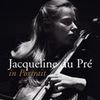
电驴资源
| 用户共享的电驴资源列表 | |
|---|---|
| 贾桂琳杜普蕾.-.[音乐大师肖像系列─贾桂琳杜普蕾.01].演唱会.(DVDRip).mkv | 889.31 MB |
| 贾桂琳杜普蕾.-.[音乐大师肖像系列─贾桂琳杜普蕾.02].演唱会.(DVDRip).mkv | 416.58 MB |
| 贾桂琳杜普蕾.-.[音乐大师肖像系列─贾桂琳杜普蕾.03].演唱会.(DVDRip).rar | 102.67 MB |
| 1.38 GB | |
电驴资源简介
| 资源介绍 |
| 专辑中文名: 音乐大师肖像系列─贾桂琳杜普蕾 |
| 语言: 英语 |
| 地区: 英国 |
简介:  内容介绍: 音乐大师肖像系列─生死狂恋贾桂琳杜普蕾(Jacqeline du Pre IN PORTRAIT) ★2005年戛纳古典奖 ★2005年德国唱片大奖年度10大名片 ★法国古典报导杂誌年度10大名片 产品内容 我们无法解读她,我们只能纪录她,因为从其中,我们看到了一个伟大孤独的艺术灵魂如何将艺术提升到极致。-克里斯多夫 纪录片导演 ●一位乐坛奇女子、一道乍现即逝的流星,一个用生命詮释音乐的演奏家,是她让艾尔加大提琴协奏曲蜚声国际、是她令与巴比罗里爵士共演的此曲录音风骨尽现、成就千古绝响。她的热情、爱欲、狂傲、执著,全都寄寓那奔放琴音之中,而艾尔加曲末的声声呜咽,都彷彿是为她困在多发性关节硬化症病躯中的孤寂灵魂,喟然一叹,世人更因她的不幸际遇而一洒热泪,她就是二十世纪的大提琴传奇-贾桂琳.杜普蕾。 ●超脱世俗的天赋、近乎直觉的詮释能力与狂放的大提琴演奏,没有人能否认杜普蕾是二十世纪罕有的天才。叹婉的是,上帝亲吻了她的手,却又近乎粗鲁的将其收回。她的天才,与巴伦波因一段金童玉女式的婚姻,都在多发性关节硬化症发病后化为幻影。她孤独面对的残忍际遇,电影「狂恋大提琴」与传记「杜普蕾的爱恨生死」中已然尽述。而她的艺术,她在大提琴上之所以成为不世天才,这张由BBC发行的「生死狂恋」影像纪录,正可窥见一二。 ●全片由BBC名制片克里斯多夫.努本制作,他本就是杜普蕾夫妇的好友,也亲见这位天才的殞落。全片除了收录有杜普蕾珍贵真实的生活纪录、巴伦波因、巴比罗里及音乐家好友的访谈之外,更成功捕捉了这位传奇大提琴家的演奏艺术。通过片中1970年杜普蕾与夫婿巴伦波因的艾尔加大提琴协奏曲演出珍贵画面,可见识到她发乎自然的演奏方式,单单就凭身体动作,即可严格地识别出乐谱的分句。她非常自由地随著乐器摇晃身体,毫不做作的表现,不仅感染观眾,也感动了舞台上的共演者。而努本更以自己的创作《鬼魂》来搭配片中另一首贝多芬第五号钢琴三重奏的演出,杜普蕾、巴伦波因与小提琴家好友祖克曼在此的共演水乳交融,而大提琴不失个性的表现正是杜普蕾式的,外放情感与孤寂灵魂的共存体。 单面双层 ALL Audio 1 Dolby Digital 字幕3 /德法西 约155分鐘 艺人名称: 贾桂琳杜普蕾Jacqeline du Pre 唱片公司: 金革 音乐类型: VCD/DVD 唱片编号: JDV311117 发行日期: 2007/09/29 备注: 【已绝版!无法供货!】 品项: DVD All Regions - Regular 1.33:1 / 4:3 & Widescreen 16:9 Anamorphic - LPCM Stereo / Mono - Colour - 155 Minutes - NTSC Actors: Jacqueline du Pr Format: Classical, Color, NTSC Language: English Subtitles: German, French, Spanish Region: All Regions Aspect Ratio: 1.33:1 Number of discs: 1 Rated: NR (Not Rated) Studio: BBC / Opus Arte DVD Release Date: September 21, 2004 Run Time: 155 minutes Jacqueline du Pre's extraordinary career was cut cruelly short by illness in 1973 when she was only 28 years old. When she died 14 years later, she remained as vibrant a figure in the public mind as she had been at the pinnacle of her career. Award-winning film maker Christopher Nupen succeeded in capturing the spirit of one of the greatest musicians of the 20th century in his classic documentary (restored and digitally re-mastered for DVD), Jacqueline du Pre and the Elgar Cello Concerto. This DVD portrait also offers Nupen's film The Ghost, featuring a performance of Beethoven's Piano Trio No. 5. Tracks: Elgar :- Cello Concerto in E Minor Op. 85 Beethven :- Piano Trio No. 5 in D Major Op. 10 No. 1 (The Ghost) 引用Note: This DVD contains Two films 1. Jacqueline du Pré and the Elgar Cello Concerto 2. Beethoven Trio - The Ghost What is it that makes some artists live longer and brighter in the memory? In Jacqueline du Pré's case, she not only surprised and delighted us with her music, she had ways of touching the heart that are given to very, very few but there is even more to it than that. Nobody really knows the answer to that question, but while you cannot explain it you can feel it and you can film it. That is what we have done. Our DVD contains both a portrait film of Jacqueline du Pré and complete performances of the Elgar cello concerto with the Philharmonia Orchestra, conducted by Daniel Barenboim (a performance that has already passed into legend) and Beethoven's Ghost Trio which she plays with Daniel Barenboim and Pinchas Zukerman. THE GHOST was described by the French opera and film director Jean-Pierre Ponnelle as the most successful translation of musical performance onto the screen that he had ever seen. Jacqueline du Pré and the Elgar Cello Concerto Jacqueline du Pré caught the public imagination when she was still in her teens, partly because she had a very unusual and elevated relationship with the Elgar cello Concerto. For critics and public alike, her performances focused new attention on the inherent pathos in Elgar's melancholy masterpiece and had an emotional quality that has never been matched by anyone else. She played it first at the Royal Festival Hall in London on 21 March 1962 when she was just seventeen years old. On the following morning, Neville Cardus, one of England's most distinguished writers on music, described the work in The Guardian as, "A swan-song of rare and vanishing beauty", and he reviewed her performance of it in such strong and poetic terms as any seventeen year old has ever received from a senior critic. He concluded his review with these words: "Those actually present were witness, on the first day of spring, to an early blossoming in Miss du Pré’s playing, and such a beautiful blossoming as this year, or any other year, is likely to know for a long time to come." In the next few years, Jacqueline du Pré won an enthusiastic audience for the concerto, not only in the United Kingdom but in the rest of Europe, in the United States and in the Soviet Union. She played the work for the last time in 1973, when her brilliant career as one of the finest musicians that Britain has ever produced, was cut short by multiple sclerosis. After 1973, she could no longer play the cello, but she remained a brave and adventurous spirit, her passion for music undimmed and her attitude in coming to terms with her illness as touching as it was courageous. This film begins with an account of her activities after the onset of her illness. It ends, at Jacqueline du Pré's request, with a re-edited version of the film which we made with her in 1967, a film which sketches her childhood and the development of her musical talent, her meeting with Daniel Barenboim and their marriage in 1967, her relationship with the Elgar Concerto and, finally, a complete performance of the work with the Philharmonia Orchestra conducted by Daniel Barenboim - a performance that is remarkable by any standards and, for many, quite unforgettable. There are contributions by Daniel Barenboim, Sir John Barbirolli, Charles Beare (who looked after her cellos throughout her career), William Pleeth, Iris and Derek du Pré (Jacqueline du Pré’s parents) and with music by Camille Saint-Saëns, Iris du Pré , François Couperin, Enrique Granados, Max Bruch, Johannes Brahms and Edward Elgar. The Ghost This is almost certainly the finest performance ever filmed of this great work - Beethoven’s Piano Trio Opus 70 No. 1, known as The Ghost. The work is a masterpiece, the performance spellbinding and the filming, in the words of the French film and opera director Jean-Pierre Ponnelle, the most successful translation of musical performance onto the screen that he had ever seen. The filming took place in St John’s Smith Square, London on the 12th of May 1970, before the onset of Jacqueline du Pré’s illness and in the early days of the Barenboim/du Pré/Zukerman Trio, which promised to become one of the great Piano Trios of all time. In 1808, the composer and violinist Louis Spohr was invited to a rehearsal in Beethoven’s house of the D major Piano Trio Opus 70 No. 1, known as the The Ghost, and wrote of the occasion: “It was not an enjoyable experience. First of all the piano was dreadfully out of tune, which did not trouble Beethoven in the least, since he could not hear it. Little or nothing remained of the brilliant technique which had been so much admired. In loud passages the poor deaf man hammered away at the notes crashing through whole groups of them so that without the score one lost all sense of the melody. I was deeply moved by the tragedy of it all. Beethoven’s almost continual melancholy was no longer a mystery to me.” Background Early in May 1970, I booked a converted church in London, known as St John's Smith Square, to film a recital with Andrés Segovia. When we were already very close to the filming date, the American impressario Sol Hurok threw a spanner in the works. He advised Segovia against doing the recital with us because he believed that he could arrange something “better”, meaning more lucrative, in the United States. In fact he did us a favour because without his intervention neither our film of THE GHOST with Jacqueline du Pré, Pinchas Zukerman and Daniel Barenboim nor our film Andrés Segovia: THE SONG OF THE GUITAR, which was eventually shot in the Palaces of the Alhambra, in Granada, would exist. In the end, Sol Hurok's project never flew and so, six years later, in 1976, we went with Segovia to Granada and filmed him in the Palaces of the Alhambra, a rather better location which, to use Segovia’s own words, was “the Leitmotif of his life and the place where he opened his eyes to beauty and was born for the second time - and the most important." Finding myself with a booking at St John's and nothing to shoot, I called Daniel Barenboim and Jacqueline du Pré in Brighton. I had just heard them play Beethoven's Ghost Trio at concerts in Oxford and Brighton. The Oxford concert in particular had left an impression on me that was indescribable, one of those things that music can sometimes do, and which cannot be explained - something extraordinarily elevated which seems to remain forever in the memory. I asked whether they could come to London to play THE GHOST for our cameras in St John's Smith Square. They came up on the first train in the morning and went back on the last train that night. At the end of it all, we had THE GHOST on film. I am profoundly grateful for having had that opportunity. Some months later, as soon as we had finished putting the film together, I invited the three of them see it in a London theatre. Before the screening I said that I regretted that film could never capture the extraordinary spirit which they had generated at their concerts in Oxford and Brighton. When the screening ended Jacqueline du Pré, without any prompting and before anyone else had uttered a word, suddenly said, "I don't agree with you. It's much better on the film.". We were all taken aback and I asked why it was better on the film. She replied "Because you can see what's going on and it adds another dimension". I disagreed with her because I had been in the hall at those concerts and I had seen, felt and heard what effect they had had on those audiences. I felt that she had been too busily engaged on the stage at the time to know what effect she was having. She insisted nevertheless and it is a measure both of her generosity and of her perception of what film can do that she spoke those words. And so we agreed to disagree. Twelve years later, I was having supper with her in London when she was already very ill and Daniel Barenboim called from Paris. "What are you doing?" he asked. "Having supper with Kitty" (her nickname for me). "Well tell Kitty that I showed THE GHOST to Jean-Pierre Ponnelle last night and he said that he thinks it is the most successful translation of music onto the screen that he has ever seen". Within two seconds Jackie fired at me. "You see. I told you so". Nobody, not even her closest friends, would have expected her to remember that after twelve years, but it says something important about what kind of person she really was. She was a blithe spirit, that's for sure, she was definitely otherworldly, but she was not as fay as most people thought. She really was not interested in the daily trivia, but, on music and the things that really matter to the human heart Jackie was a virtuoso. She was also rock solid in her perceptions which ran extremely deep. It took me some years to realise fully what she was telling me and it was one of the most important lessons in my professional life. I know now that she was right and that something of the magic which those three wondrous artists created on the stage has, after all, been caught in the camera, remains there for the future, and comes across to the perceptive viewer. AWARDS: Top-selling classical DVD title of 2004, DVD of the Year Award at Midem in Cannes January 2005 Related details This is our first Jacqueline du Pré DVD and we are profoundly grateful that we were there and close to her when she was at the height of her powers, to record something of her glorious qualities, both for those who have already been touched by her gift and for those who will come to know her magic in time. DVD Extra features This DVD includes personal introductions by Christopher Nupen and Allegro Molto, a compilation of excerpts from Christopher Nupen films to date. http://www.allegrofilms.com/film/Jacquelin...tary.php 引用Hilary and Jackie 荒地无情有琴天(1998) 先来介绍一下本片主角Jacqueline du Pré的一生 杜普蕾 (Jacqueline du Pre, 1946-1987):英国女大提琴家。 贾桂琳‧杜普蕾是出生在一个音乐家庭中,她的母亲事一位钢琴家,也是天生的教育者。五岁时,她从收音机听到某个大提 琴音乐,而确定了她一生的志业──成为伟大的大提琴家。之后便在伦敦的大提琴学校赫伯‧瓦伦开始学琴,十岁时成为威廉‧普利兹的学生,这也是她最主要的教 导者。完成该阶段的学习后,她更进一步的到瑞士、莫斯科学习。11岁的她便已获得苏纪雅大奖,那是为纪念已过世6年的葡萄牙女大提琴家而设的。 16岁时,她成功的举行了在伦敦的首度公演;也和管絃乐团合作。她与钢琴家史帝芬‧科瓦契形成了一组绝佳的二重奏组合,渐渐地,她的名声日益巩 固,1965 年她首度在美国演出,两年后,便与钢琴家兼指挥家的巴伦波因结婚。1971年7 月,正当贾桂琳开始发展另一段巔峰时,然而,她开始严重的受到一种神秘的慢性病侵袭(多发性硬化症),因为身体不适,只剩下少量的演奏和教学,渐渐地病情急续恶化,她已不能再演奏,也因为这样,巴伦波因渐渐的离开她,病情已恶化到极限,1987年 10月 19日,逝於英国伦敦,享年 42 岁。 每每老师播放相关音乐杜撰电影时都聚精会神安静品嚐这些作品,毕竟杜撰跟事实本身自有落差,我们只能从导演的角度、观点去解悉,而不全然了解所有事发经过,当然,导演也说过,这并不完全在反映贾桂琳的真实人生,更不是一部记录片。 在与丈夫(Daniel Barenboim,注一)巡迴表演期间,她愤怒说著『我们只是被训练出来的怪物!』,看到这我不禁想了一下,从小用钱培育出来的音乐资质天才,每天沈浸与乐器为伍,除了演奏乐器外对於其他事情似乎是一无事处,直至被世界公认的这天才脱口说出埋藏在心中的话。 电影当中导演也以第一人称手法拍摄贾桂琳出国在外的孤独心境。虽然拥有极高的声誉,却因为长期离家,那种强烈思乡的慾望窜上心头,导致她对拉琴演奏产生股厌倦,也才会把提琴放在地上晒太阳及阳台上覆著雪,这样他就可以远离此刻回抱她温暖的家,这更显出早期在外的苍凉心里。 听著贾桂琳的大提琴演奏是件很享受的事,可以感受到那被压抑的情感,在弓与弦间完全释放,如同沈重的悲鸣,述说一段不能理解的内心读白,崩溃在心里的呐喊,至终也平覆不起的伤疤。 电影中以希拉蕊与贾桂琳各自的故事分两段述说,再以首尾呼应的手法来詮释。整片的结构看似抽象片段,技巧却是极为高超。 女主角Emilth Watson那种神经质、夸张的演技,很适合这种悲剧角色,现实中的贾桂琳就是天才与神经质的结合,Watson精采地演出天才背后的真实面,再加上得病之后,日趋不便、憔悴,Watson演得扣人心弦。 真实的故事、天才的悲剧,再加上Watson及其他演员的演技、导演的功力,使整部电影与观眾产生巨大共鸣,这是一部很值得用心看的好电影。 一下是电影剧情大纲简介及主角导演介绍 http://taoyuan.starblvd.net/cgi-bin/movie/...kie.html Elgar Cello Concerto 1st mov. 我最喜欢Jackie的其中一曲。充斥著悲愤所压抑的情感。首席则为Daniel Barenboim 而此乐章也为整部电影的主要配乐。欣赏中在高潮部份真的会令人起鸡皮疙瘩,那种震撼连我彷彿能置身感受那凄凉的心境。看著Jackie拉著弓,夸张而激动的肢体。也有人认为是因为他动作太过夸大导致得了就连目前也无药可医的病。也许是投入的感情太多,太全心全意了。(注二) 这首曲子马友友演奏过。 在Jackie去世后马友友还以高价购买Jackie生前所拉的琴。首席还是Daniel Barenboim(注三) 此为另一首所演奏的Haydn Cello Concert C major Allegro Molto (注四) 注一: Jackie的丈夫Daniel 其实在当时名声也与贾桂琳相当。当初两人的闪电结婚也煞羡许多人,Jackie也为了他改姓犹太教,看得出当时两人为爱所疯狂著,就连报章杂誌也大肆报导。 Daniel 为阿根廷籍的钢琴加兼指挥家。 注二 : Elgar Cello Concerto 1st mov. http://tw.youtube.com/watch?v=L5C99JyP2ns 注三 : Yo-Yo Ma: Elgar Cello Concerto, 1st mvmt http://tw.youtube.com/watch?v=RM9DPfp7-Ck 注四 : Jacqueline du Pré Haydn Cello Concerto C major Allegro Molto http://tw.youtube.com/watch?v=4VwcT7MM_wE http://www.wretch.cc/blog/tina4tina/20597916  
|
| 别名: 生死狂恋 |
| 发行时间: 2004年09月21日 |
| 资源格式: DVDRip |
|
专辑曲目: 01. Elgar, Sir Edward: Concerto for Cello in E minor, op. 85 New Philharmonia Orchestra - Daniel Barenboim 02. Beethoven: Trio for Piano and Strings no 5 in D major, Op. 70 no 1 "Ghost" Daniel Barenboim - Piano; Pinchas Zukerman - Violin; 03. Bonus Track Includes :- -Personal introductions by Christopher Nupen -ALLEGRO MOLTO - Allegro Films compilation -Jacqueline du Pre photo gallery from the film -24 page booklet in English, French and German |
| 专辑英文名: Jacqueline du Pre In Portrait |